
The Mission

The first spark
My name is Elise, and I created this game for people like me.
As a teenager in Hong Kong, I spent most of my life thinking gender equality was ‘solved’. Like most of my friends, I simply didn’t experience it – at least not visibly – in my day to day life. I had great educational opportunities, was treated no differently from my brothers at home, and never felt held back because of my gender.
But as I’ve grown older, I’ve realised that isn’t the whole story. We are only halfway through the project of gender equality, as a society: so much progress has been made, but there’s a long way still to go. Speaking to many inspiring women and organisations working in this area made me determined to do my part to spark conversation amongst my peers; it’s one of the most important conversations we’ll ever have.

The problem isn’t somewhere else.
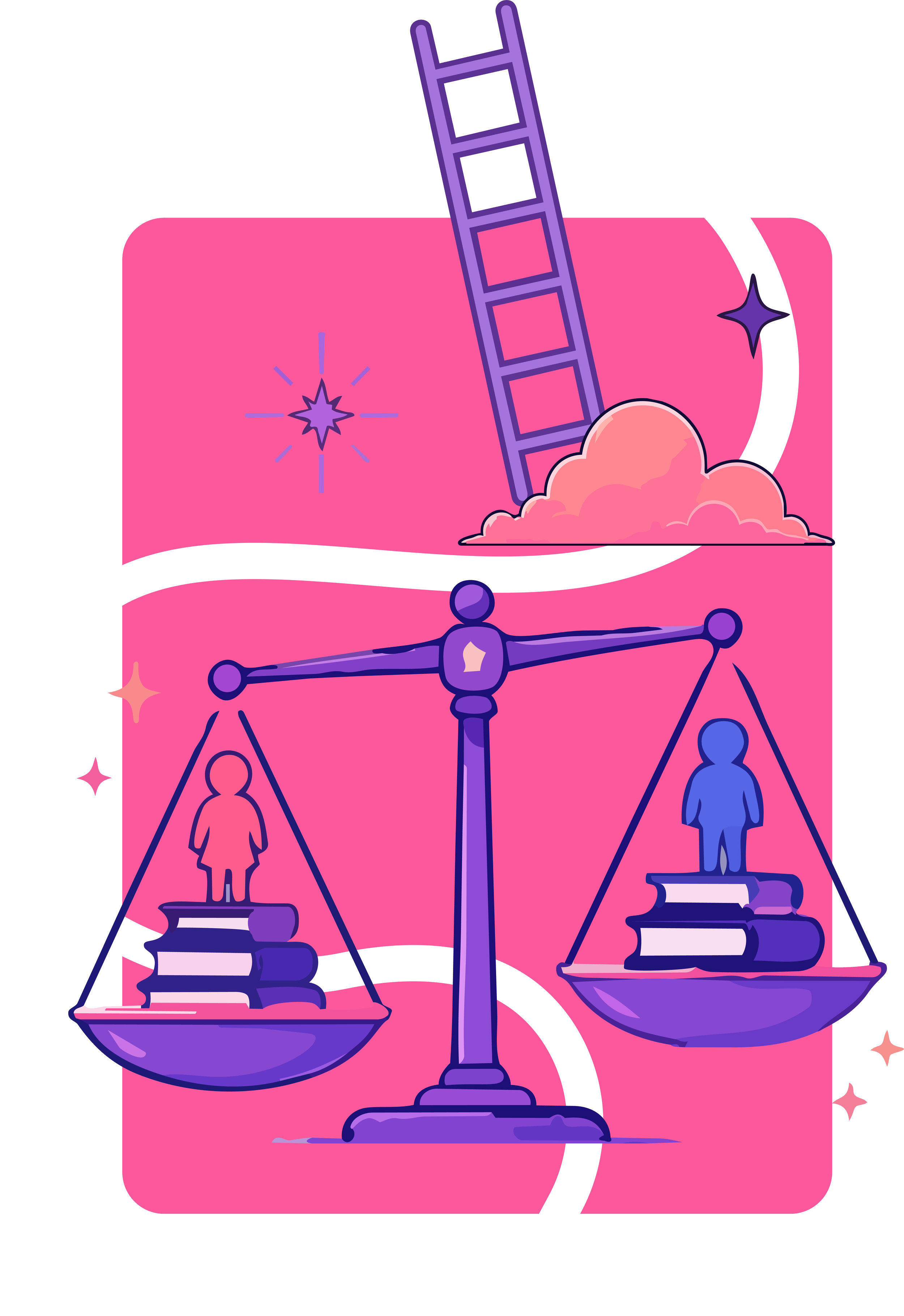
Equality starts with seeing the rules that have been hiding in plain sight.
For teens, gender inequality can be easy to file under history, another country or a distant adult workplace. But ideas about who should lead, who should care, which careers belong to whom and whose behaviour gets excused are being formed much earlier.
EQUALISH exists to make those patterns visible—and to show young people that they have the power to change them.
Equal on paper is not always equal in practice.

Women make up 52% of university students in Hong Kong. Yet those education figures sit alongside a gender pay gap of 29% – and just 21% of directors at major Hong Kong companies are women
And care is distributed extremely unevenly: in 2024, 564,000 women, compared with 38,900 men, were outside the labour force because of household duties
Girls’ intelligence and ambition are not the problem. But the route through work, care and leadership is shaped by unequal expectations and invisible barriers
The awareness gap matters
A 2024 survey by the University of Hong Kong found that men tended to overestimate how easily women could access and control resources such as education, property and safety. It also showed that “improved gender equality awareness positively impacts women's mental health and quality of life.”
The challenge is helping people recognise what inequality looks like in ordinary life, and giving them the confidence to respond.
That learning should begin before young people enter the workplace. The same HKU and HKFWC study recommended integrating gender education into primary and secondary school curricula to foster early gender awareness.
Why a board game?
Information feels different when you have to use it
A factsheet can define the glass ceiling
Equalish makes you wait until it’s smashed.
A lesson can explain unequal care responsibilites.
An Event card can ruin your progress because family care duties have been pushed onto you
A poster can encourage allyship
Receiving an Allyship card boost makes you feel the power of looking out for others
A law can state that you have a right.
An Empowerment card shows how knowing that right can change your outcome

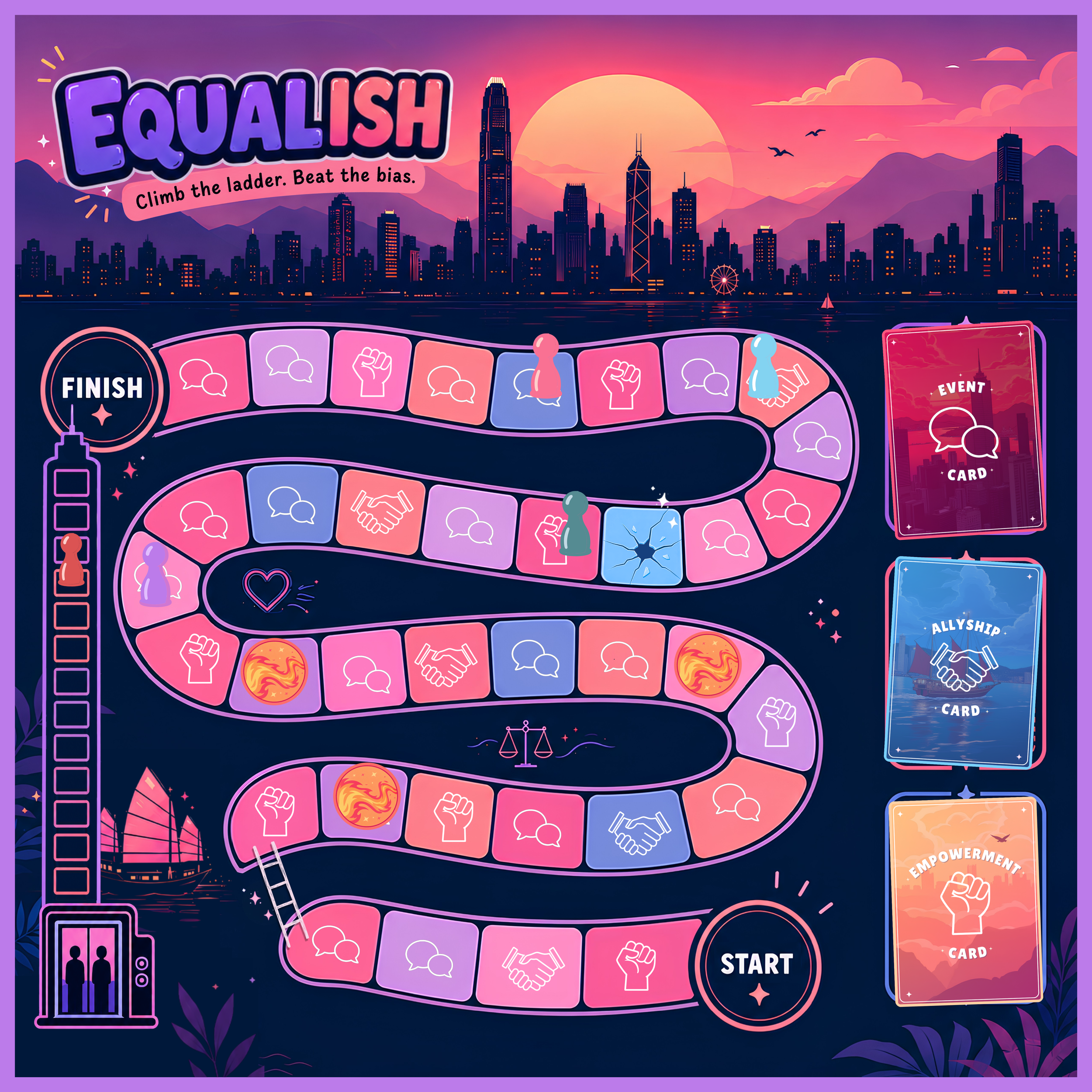
The board game allows players to experience a system rather than simply hear about it. Repeated Events show how small disadvantages accumulate over time. The elevator makes structural privilege visible and tangible.
And the shared victory shows players that true equality isn’t just about replacing one ‘winner’ with another, it’s about creating a fairer route for everybody.
“Integrating gender education into primary and secondary school curricula will foster early gender awareness and self-awareness.”
— University of Hong Kong and Hong Kong Federation of Women’s Centres, 2024.